Bibimbap
KI-generiertes Bild
Korean

Bibimbap

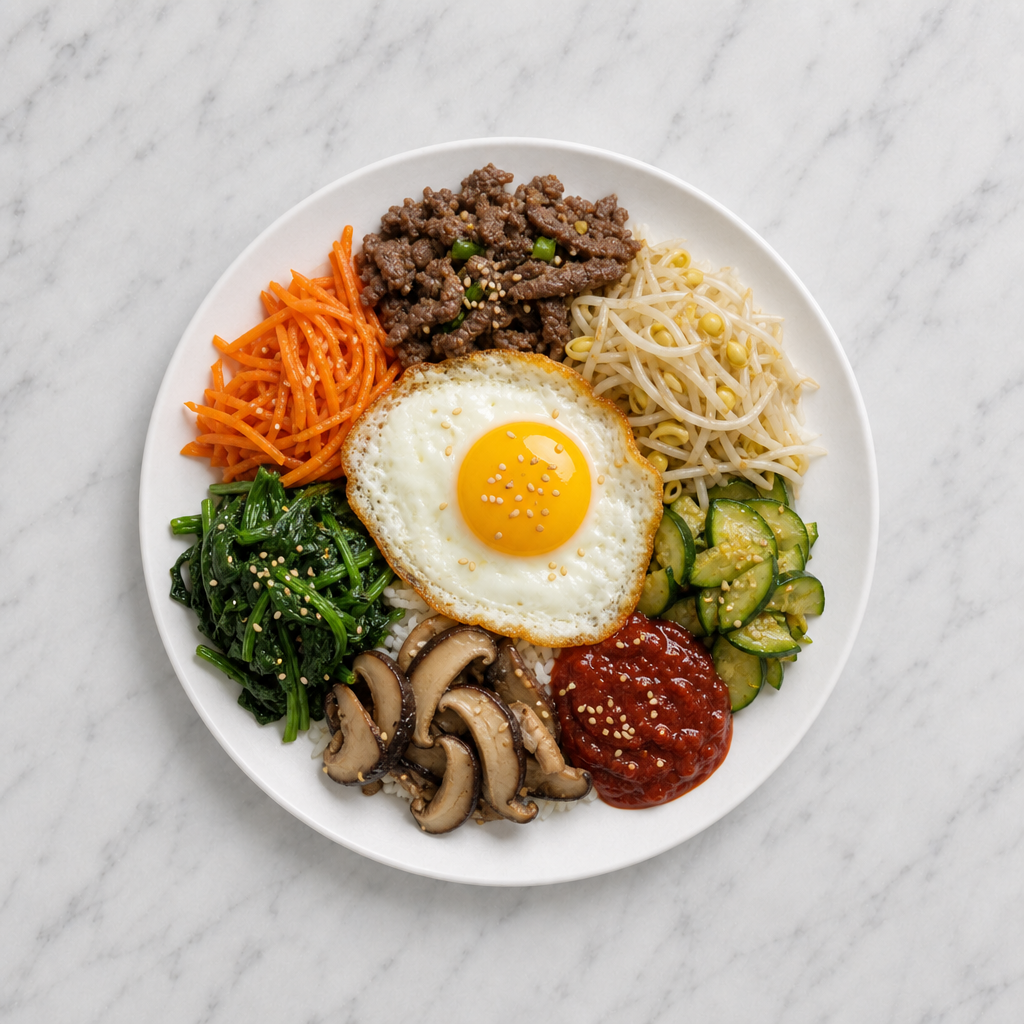
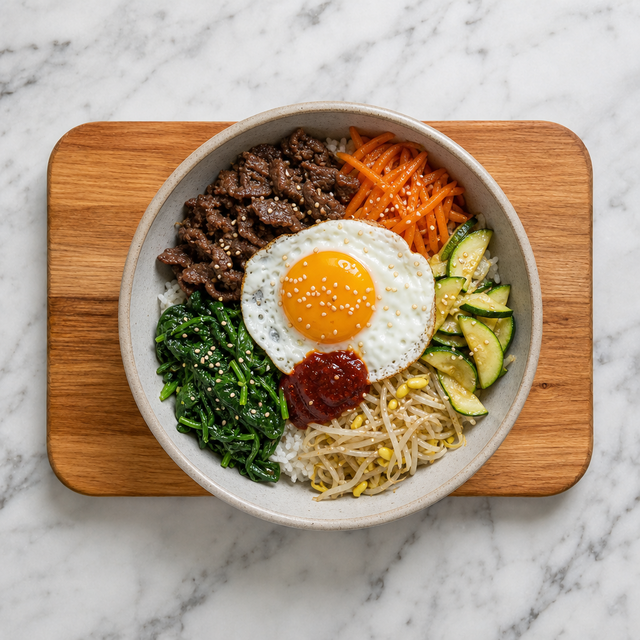
A vibrant Korean rice bowl layered with seasoned beef, tender vegetables, a sunny fried egg, and a sweet-spicy gochujang sauce. Each bite combines warm rice, crisp sprouts, savory meat, and fresh sesame flavor.

55 min 4 Portionen Medium
Alle Rezepte

Zubereitung

1
Cook the rinsed rice according to the package directions until tender, then cover and rest for 10 minutes so the grains finish steaming.
2
Whisk 30 ml soy sauce, 15 ml sesame oil, half the garlic, and the beef together in a bowl. Let the beef marinate for 15 minutes while the rice cooks.
3
Whisk the gochujang, rice vinegar, honey, 15 ml water, and the remaining 15 ml sesame oil into a glossy sauce. Set it aside.
4
Heat a large skillet over medium-high heat. Sauté the carrots with 5 ml sesame oil and a pinch of salt for 3 to 4 minutes, until just tender, then transfer to a plate. Repeat with the zucchini for 2 to 3 minutes.
5
Sauté the bean sprouts in the same skillet for 2 minutes, until barely softened. Add the spinach and remaining garlic, then sauté for 1 to 2 minutes until the spinach is wilted. Season both with the remaining soy sauce.
6
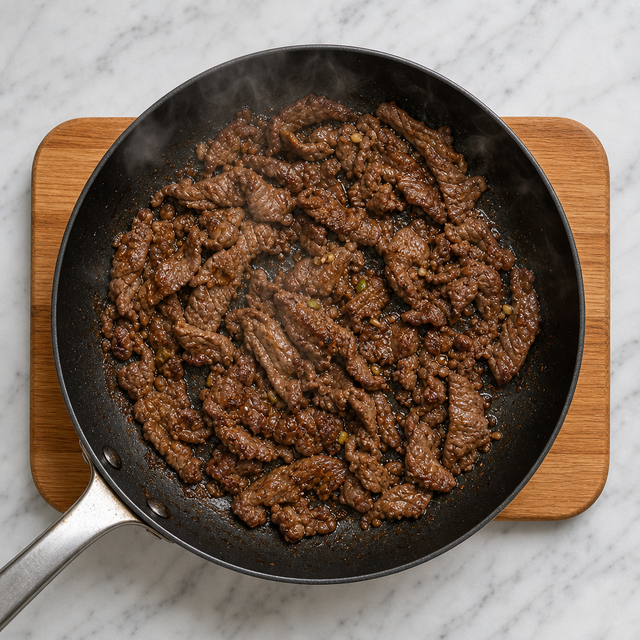
Raise the skillet to high heat and sauté the marinated beef in a single layer, working in batches if necessary, for 3 to 5 minutes. Turn once and cook until browned and the center reaches 74°C.
Thinly sliced beef browning in a skillet KI-generiertes Bild
7
Wipe out the skillet, add a thin film of sesame oil, and fry the eggs over medium heat for 3 to 4 minutes, until the whites are fully set and the yolks remain soft.
8
Divide the warm rice among four bowls. Arrange the beef, carrots, zucchini, bean sprouts, and spinach in separate sections over the rice. Top each bowl with a fried egg, sesame seeds, and gochujang sauce, then serve immediately.
Colorful Korean bibimbap bowl with beef, vegetables, fried egg, and gochujang KI-generiertes Bild

Warum dieses Rezept gelingt

Bibimbap is built from contrasting components: savory caramelized beef, gently seasoned vegetables, warm rice, and a rich egg yolk tied together by sweet-spicy gochujang. Cooking the toppings separately preserves their individual character while keeping the bowl balanced.

Aufbewahren und Aufwärmen

So bewahrst du es auf

Refrigerate the cooked rice, beef, vegetables, sauce, and eggs in separate airtight containers for up to 3 days. Cool cooked food promptly before refrigerating.

So wärmst du es auf

Reheat the rice, beef, and vegetables separately in the microwave or in a skillet until steaming hot. Cook a fresh egg for the best texture; do not reheat a runny egg.

Nährwerte / Portion

758kcal
45,92 gEiweiß
84,49 gKohlenhydrate
26,20 gFett
P
Pantryvale editorial kitchen
Das Rezept wurde mit vollständigen Zutaten und geordneten Kochschritten zur Veröffentlichung vorbereitet.
Veröffentlicht 20 Aug. 2026 · aktualisiert 21 Aug. 2026